Rent vs. Buy in 2026: When Is It Better, and How Do You Escape the Rent Trap?
Buying tends to make more financial sense than renting when your monthly housing cost stabilizes your budget long enough to build equity — but high rent payments are exactly what keep many households from ever getting to that starting line, which is the real affordability puzzle in 2026. Recent data from Bank of America found that 53% of people now favor buying over renting, the first time sentiment has tipped that direction since 2023. That's a meaningful shift. But sentiment and ability aren't the same seed packet — plenty of renters want to buy and simply can't find the soil to plant in yet.
Let's dig into why, and what you can actually do about it.
The Rent Trap, Explained Simply
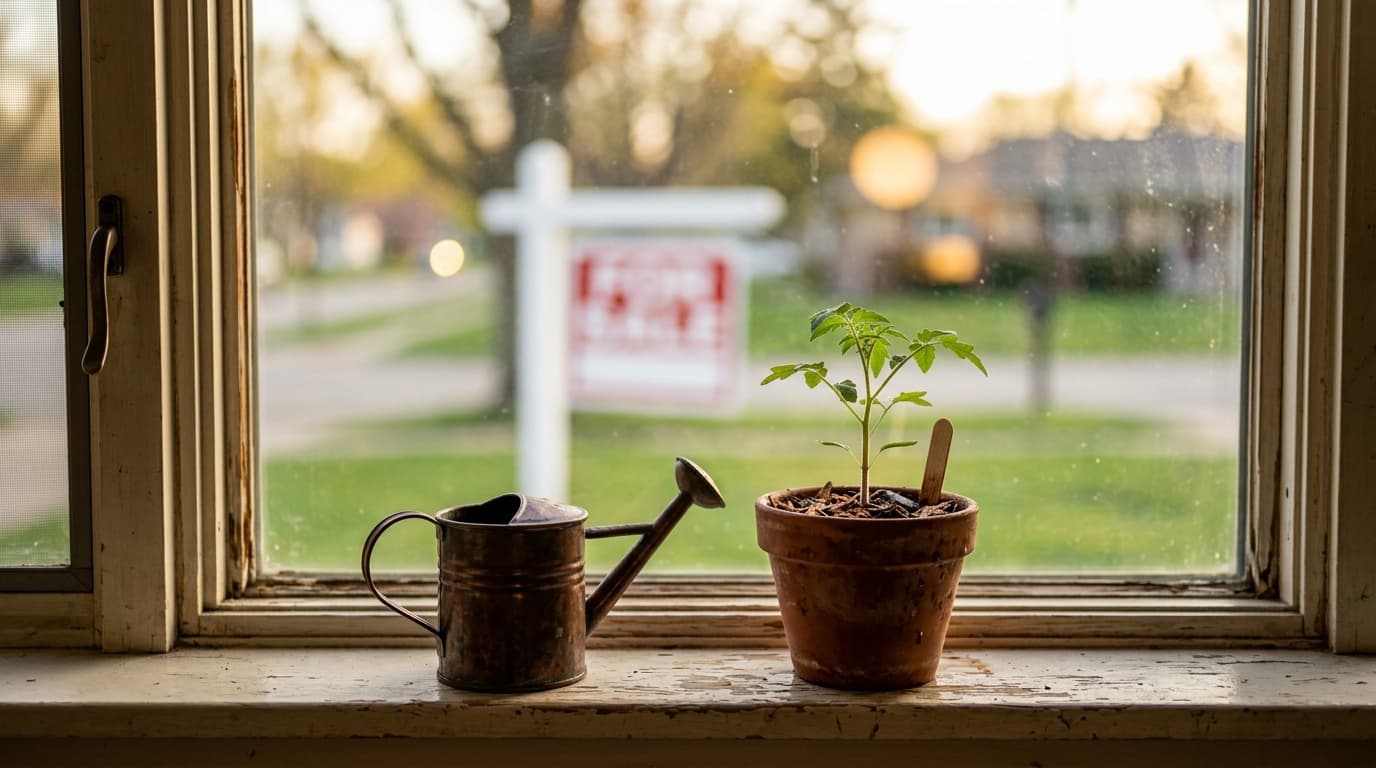
Think of renting like watering a plant that isn't yours. The water (your money) disappears into someone else's garden every month. Meanwhile, rents have climbed steadily enough that many households spend a growing share of income just keeping a roof overhead — leaving little left over to plant their own roots.
This is the rent trap: the very cost that's pushing people toward wanting to buy is also the thing preventing them from saving a down payment. High rent isn't just inconvenient. It's structurally circular.
Rent vs. Buy Isn't One Equation — It's Several
The honest answer to "when is it better to buy" depends heavily on income tier and geography, not a single national number.
Higher-income earners in competitive metros often find that monthly ownership costs can rival or beat rising rents, especially when factoring in equity building over time. In this tier, the hold-up is usually saving a competitive down payment fast enough before prices move again.
Middle-income households frequently face the tightest squeeze. Rent takes up enough of the budget that saving happens slowly, if at all — even though their income could support a mortgage payment comparable to what they're already paying in rent.
First-time buyers in more affordable states are often in the best position relative to income. Markets with lower entry price points allow buyers to close the gap between rent and ownership faster, particularly with programs built for first-generation or moderate-income buyers (programs subject to qualification).
Geography matters enormously here. A renter in Texas may find the path to ownership considerably shorter than a renter facing California price points — not because one state's residents want it more, but because the math starts from a different place.
Strategies to Break Through the Rent Trap
You don't need to uproot your whole financial life overnight. A few deliberate moves can loosen the soil:
- Separate "rent money" from "house money." Even a small automatic transfer the day rent is due trains your budget to treat future housing costs as already spoken for.
- Ask about down payment assistance and first-time buyer programs. Many states and localities offer options designed specifically to help renters cross the gap (programs subject to qualification).
- Get pre-qualified before you're "ready." Understanding what a lender might offer gives you a real map instead of guesswork — and a brokerage can shop that map across multiple lenders on your behalf, rather than offering just one path.
- Consider a smaller starter home or different neighborhood. Sometimes the fastest way to stop renting isn't a bigger budget — it's a smaller first seed.
- Watch rate movement without obsessing over it. Conditions shift. A broker who's tracking multiple lenders can help you time an application without you needing to become a full-time market watcher.
When Is It Actually Better to Buy?
Broadly: when your monthly housing cost (rent or otherwise) has stabilized enough to allow consistent saving, when you plan to stay put for several years, and when local affordability in your target area makes ownership costs reasonably comparable to renting. It's less about a universal tipping point and more about whether your personal rent-vs-buy math has finally balanced.
The Takeaway
The 53% shift toward favoring buying tells us people are ready to stop watering someone else's garden. But readiness and ability aren't the same thing — and that gap is exactly where good planning does its work. Understanding your income tier, your state's affordability landscape, and the programs available to you (subject to qualification) is how renters quietly become homeowners, one deliberate step at a time.
Ready to make a plan?
- Start your plan: planpreparehome.com/apply
- Apply now: pph.pub/apply
- Call or text: 619-777-5700
Worth reading next: The Rent Versus Buy 2026 Housing Market Decision: Why…, Rent vs. Buy in 2026: Is It Really Better to Buy Than… and Rent vs. Buy in 2026: When Is It Actually Better to…. For the local picture, see our Florida page.